Common description
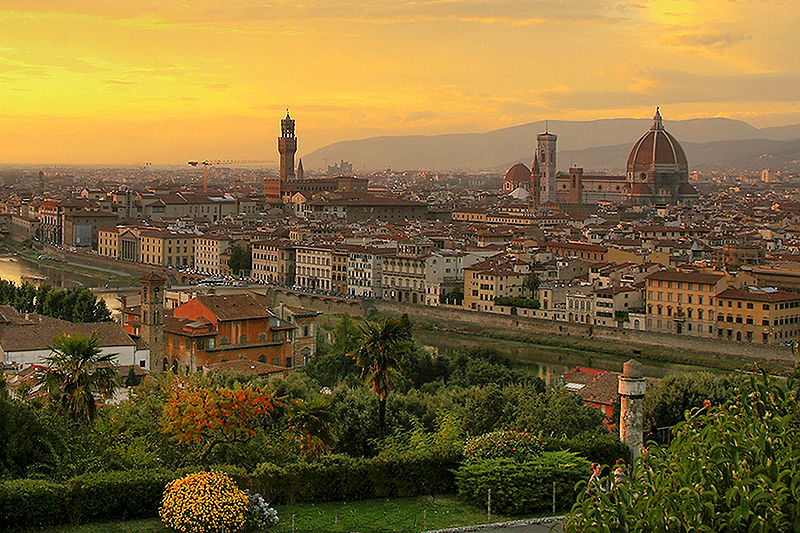
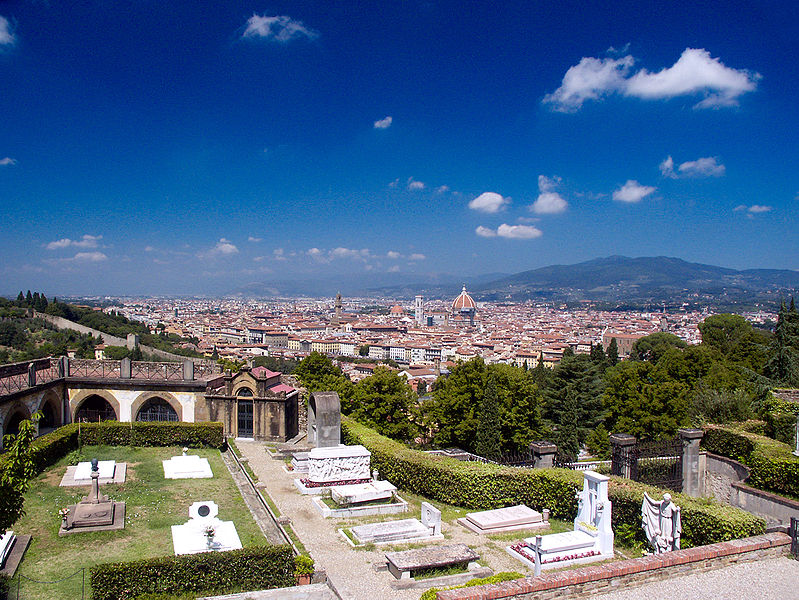
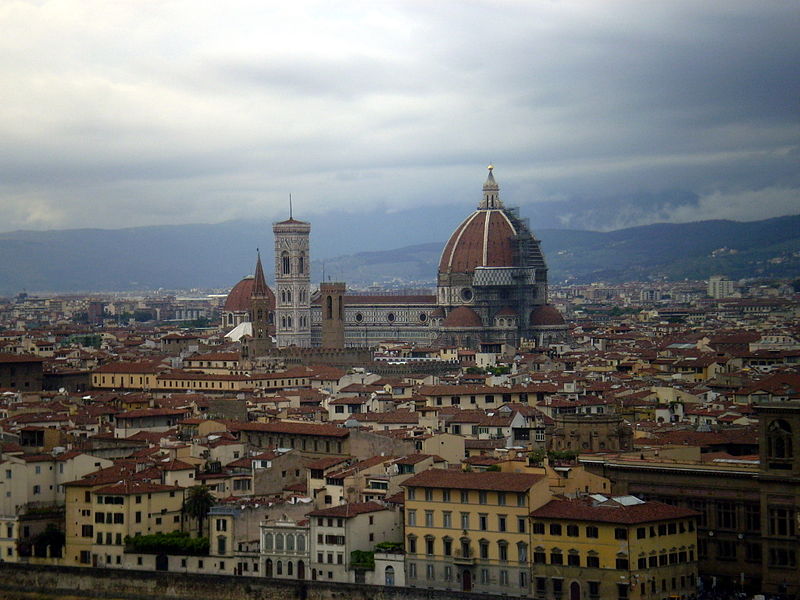
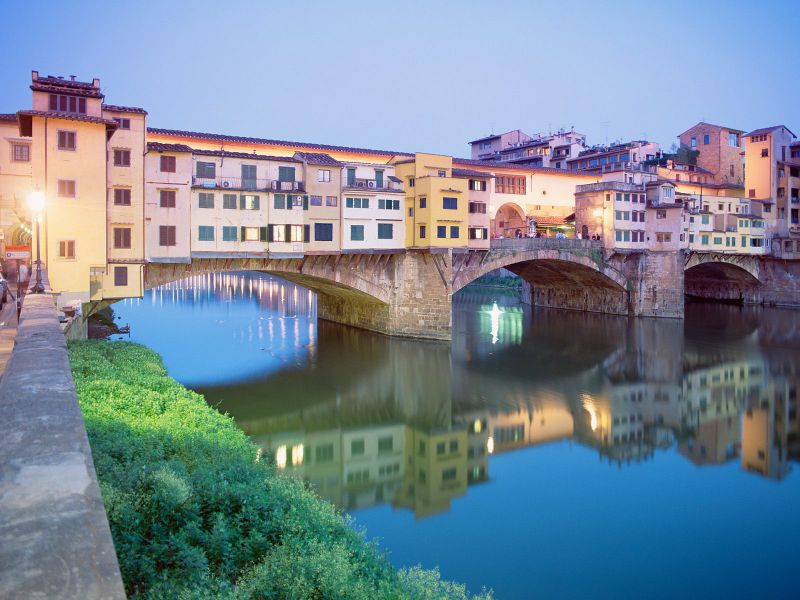
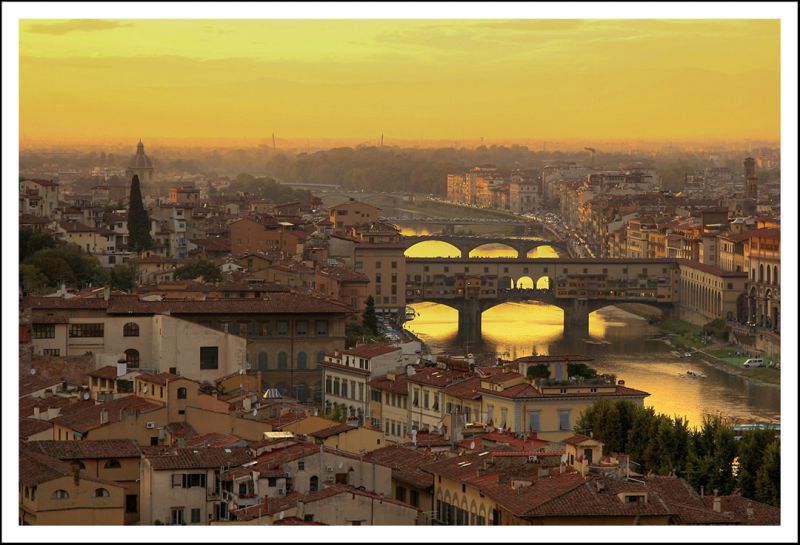
Florence (Italian: Firenze [firɛnʦe], Latin: Florentia) is an Italian museum city on the Arno River, formerly the center of the Florentine Republic, the capital of the Dukes of the Medici and the Kingdom of Italy, and now the administrative center of the Tuscany region. The population is 373,200 people (2012) [1].
Despite the distance from the sea and constant political unrest, Florence of the XIII-XVII centuries made a great contribution to the development of European and world civilization. The city has given the world such giants as Leonardo da Vinci, Michelangelo, Dante and Galileo. The local dialect formed the basis of literary Italian, the Florentine coin became the standard for all of Europe, Florentine artists developed the laws of perspective, Florentine thinkers marked the beginning of the Renaissance, and the Florentine navigator gave his name to two continents.
Now the city covers an area of about 103 km ² around the hills on the banks of the Arno River. Florence is located in an area surrounded on three sides by picturesque plains. Rivers such as the Arno, Munone, Terzole and Greve flow through the territory.
Despite the distance from the sea and constant political unrest, Florence of the XIII-XVII centuries made a great contribution to the development of European and world civilization. The city has given the world such giants as Leonardo da Vinci, Michelangelo, Dante and Galileo. The local dialect formed the basis of literary Italian, the Florentine coin became the standard for all of Europe, Florentine artists developed the laws of perspective, Florentine thinkers marked the beginning of the Renaissance, and the Florentine navigator gave his name to two continents.
Now the city covers an area of about 103 km ² around the hills on the banks of the Arno River. Florence is located in an area surrounded on three sides by picturesque plains. Rivers such as the Arno, Munone, Terzole and Greve flow through the territory.
Florence on map
+ 13°C